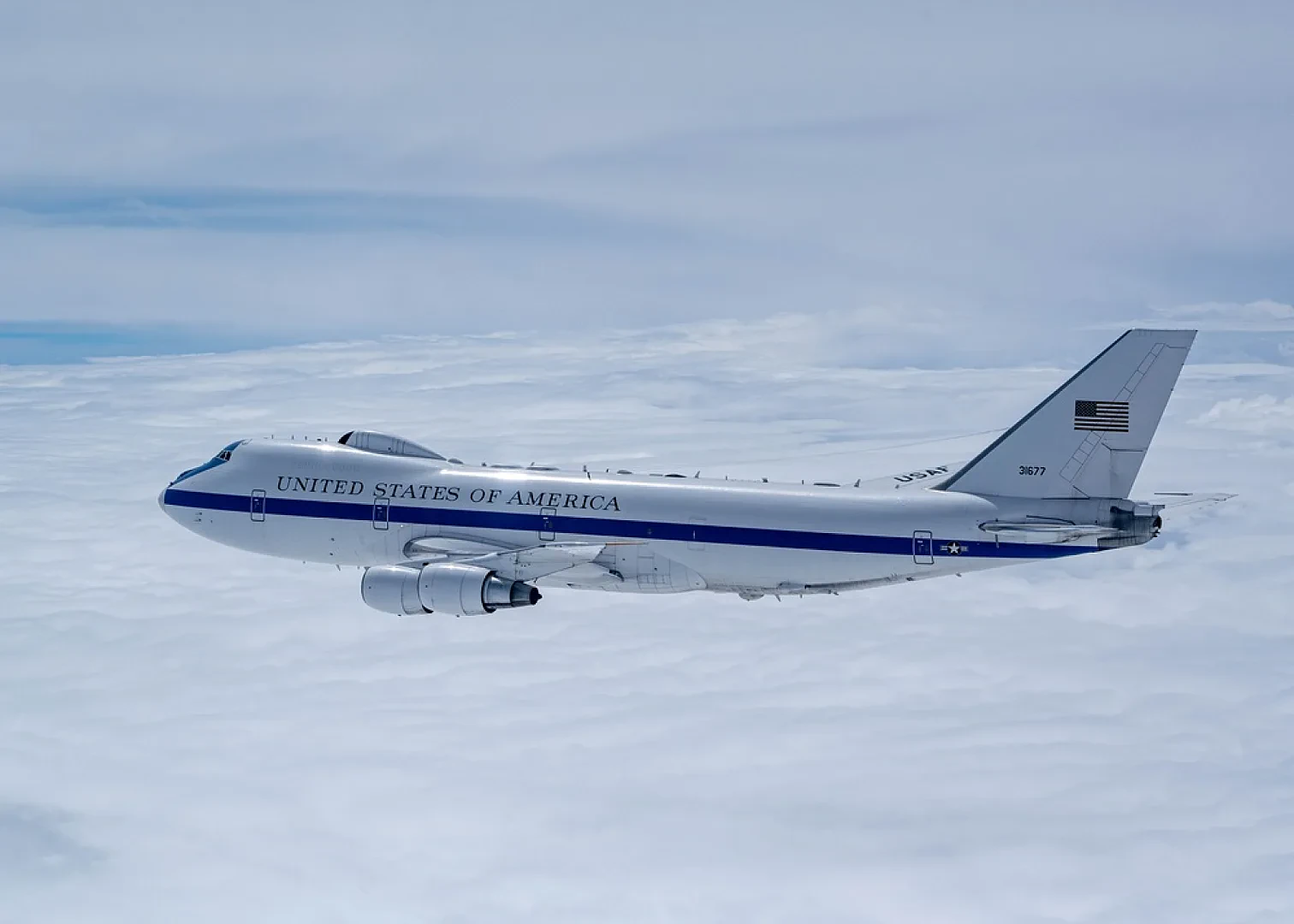
Aviation enthusiasts and plane spotters at LAX witnessed something genuinely historic last week: the first-ever landing of the U.S. Air Force's E-4B Nightwatch at Los Angeles International Airport. I've been tracking military aircraft movements for years, and this one made me do a double-take. The so-called "Doomsday Plane" touching down at one of America's busiest commercial airports? In 51 years of operation, it had never happened before. That's not a typo. Fifty-one years.
TUNE IN NOW! We're live at LAX to capture the departure of the DOOMSDAY plane! #aviation #doomsday #LAX
— AIRLINE VIDEOS (@airlinevideos) January 9, 2026
The historic LAX departure was captured live by @airlinevideos, whose YouTube livestream first documented the E-4B's unprecedented appearance at the commercial airport.
What Exactly Is the Doomsday Plane?
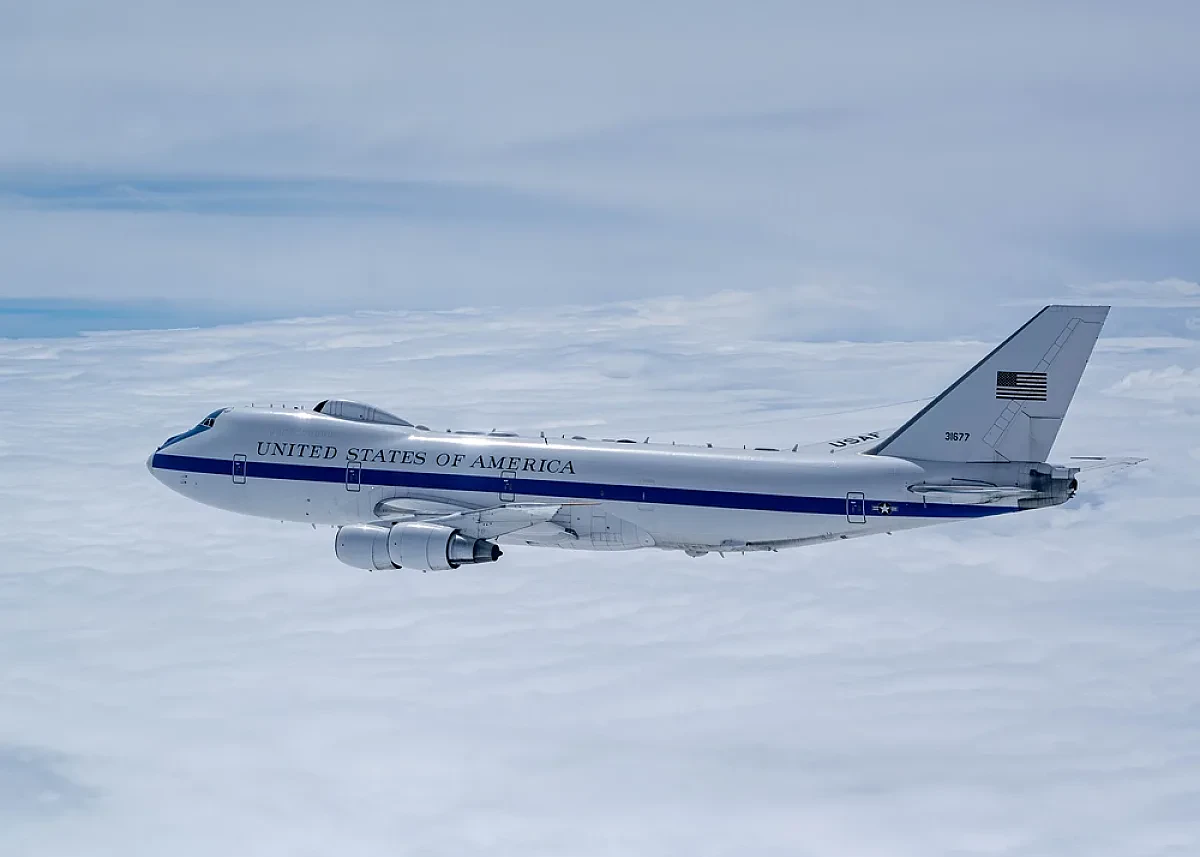
The Boeing E-4B Nightwatch is one of the most fascinating aircraft in the U.S. military's inventory, and it deserves its ominous nickname. This is the plane that would become America's flying command center if ground-based facilities were destroyed in a nuclear attack. Think of it as the president's airborne Pentagon, a flying bunker designed to keep functioning when everything on the ground has been vaporized.
The Air Force operates four of these aircraft, and at least one is always on alert at Offutt Air Force Base in Nebraska, ready to take off within minutes of receiving the order. The E-4B is officially designated as the National Airborne Operations Center (NAOC), and it's designed to do one thing exceptionally well: survive the unsurvivable and keep the chain of command functioning when everything else has failed.
The program dates back to 1973, when the first E-4A entered service during the height of Cold War tensions. The aircraft were upgraded to E-4B configuration in the 1980s with enhanced electronics and communications capabilities. These same four airframes have been flying ever since, making them some of the oldest 747s still in regular military service.
| Specification | E-4B Nightwatch |
|---|---|
| Base Aircraft | Boeing 747-200B |
| First Flight | 1973 (51 years in service) |
| Fleet Size | 4 aircraft |
| Crew Capacity | Up to 112 personnel |
| Unrefueled Endurance | 12+ hours |
| With Aerial Refueling | Theoretically unlimited (limited by engine oil) |
| Maximum Speed | 602 mph (Mach 0.78) |
| Service Ceiling | 45,000 feet |
| Home Base | Offutt AFB, Nebraska |
| Unit Cost | $223 million (1980s dollars) |
| Operating Unit | 1st Airborne Command Control Squadron |
The Tech That Makes It "Doomsday-Proof"
Here's where things get interesting for aviation geeks. The E-4B isn't just a fancy 747 with a conference room. It's been hardened against threats that would instantly destroy any other aircraft, and the engineering required to achieve this is genuinely impressive.
Electromagnetic Pulse (EMP) Protection: The entire aircraft is shielded against electromagnetic pulses, which are generated by nuclear detonations. A nuclear explosion at high altitude could fry the electronics of every unprotected aircraft within hundreds of miles. Modern aircraft are basically flying computers, and an EMP would turn them into very expensive gliders. The E-4B would keep flying, systems intact.
Thermal Flash Resistance: The aircraft's specially designed paint and thermal protection can withstand the intense heat flash from a nuclear blast. While the crew isn't going to fly directly through a mushroom cloud, they can operate closer to nuclear events than any other command platform. The exact specifications are classified, but the aircraft is designed to survive scenarios that would melt ordinary aircraft.
Multiple Redundant Communications: The E-4B carries virtually every type of military communication system in existence. You'll notice that distinctive hump on top of the fuselage behind the cockpit. That's the radome housing a super high frequency (SHF) satellite antenna that allows direct communication with military satellites. The plane also carries UHF, VHF, LF, and HF radio systems.
But the most fascinating communication system is the trailing wire antenna. The E-4B can deploy a five-mile-long wire antenna from the tail for very low frequency (VLF) communications. VLF signals can penetrate seawater, which means the E-4B can communicate directly with submerged nuclear submarines. In a post-nuclear-attack scenario, those submarines might be the only other surviving U.S. strategic assets.
Inside the Flying Command Center
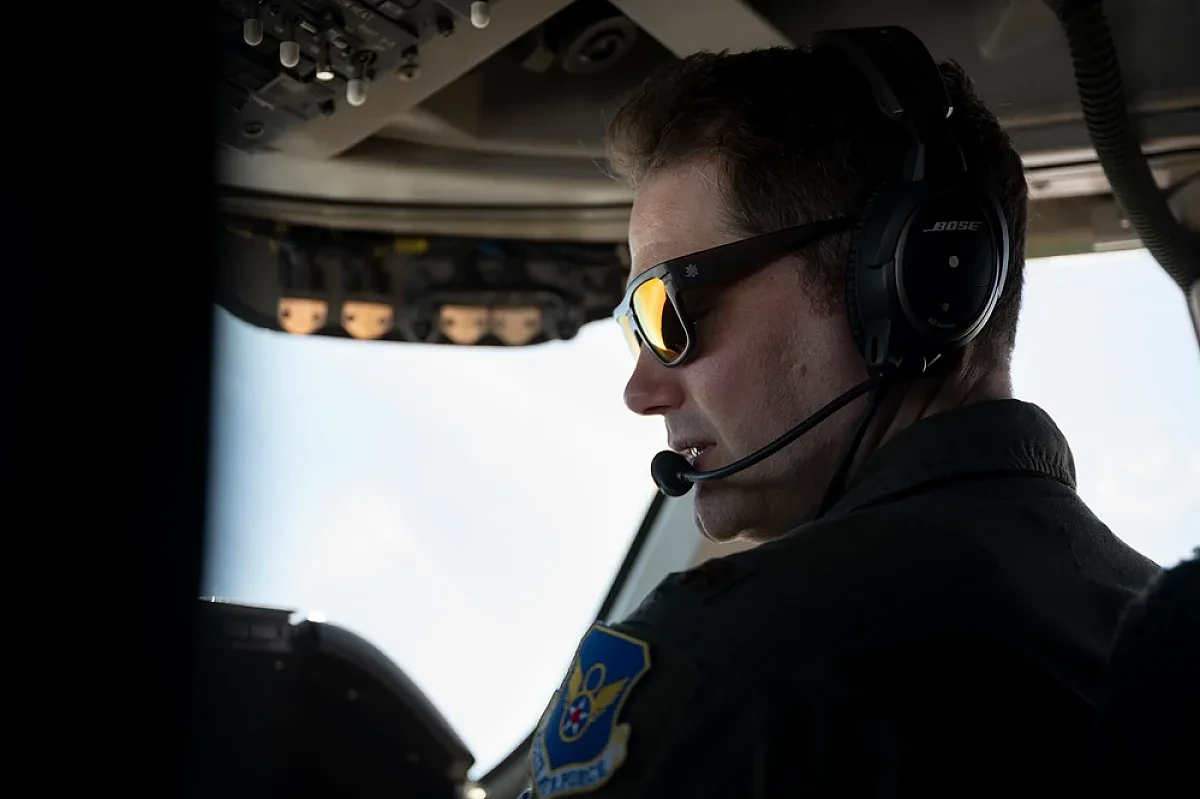
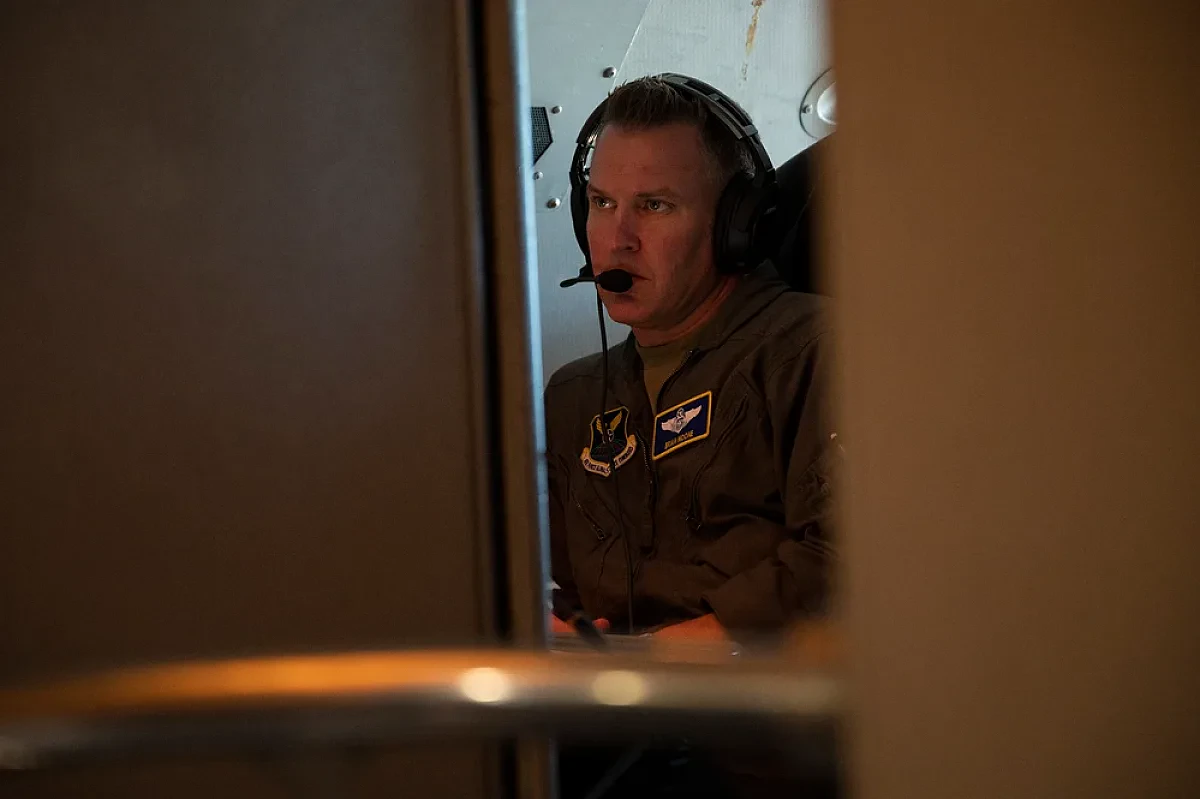
The interior of the E-4B is divided into six functional areas across three decks. The flight deck is similar to a standard 747, though with military avionics. Below and behind that, the main deck contains the National Command Authority area (where the president or secretary of defense would work), a conference room, a battle staff work area, a communications center, and a rest area for off-duty crew members.
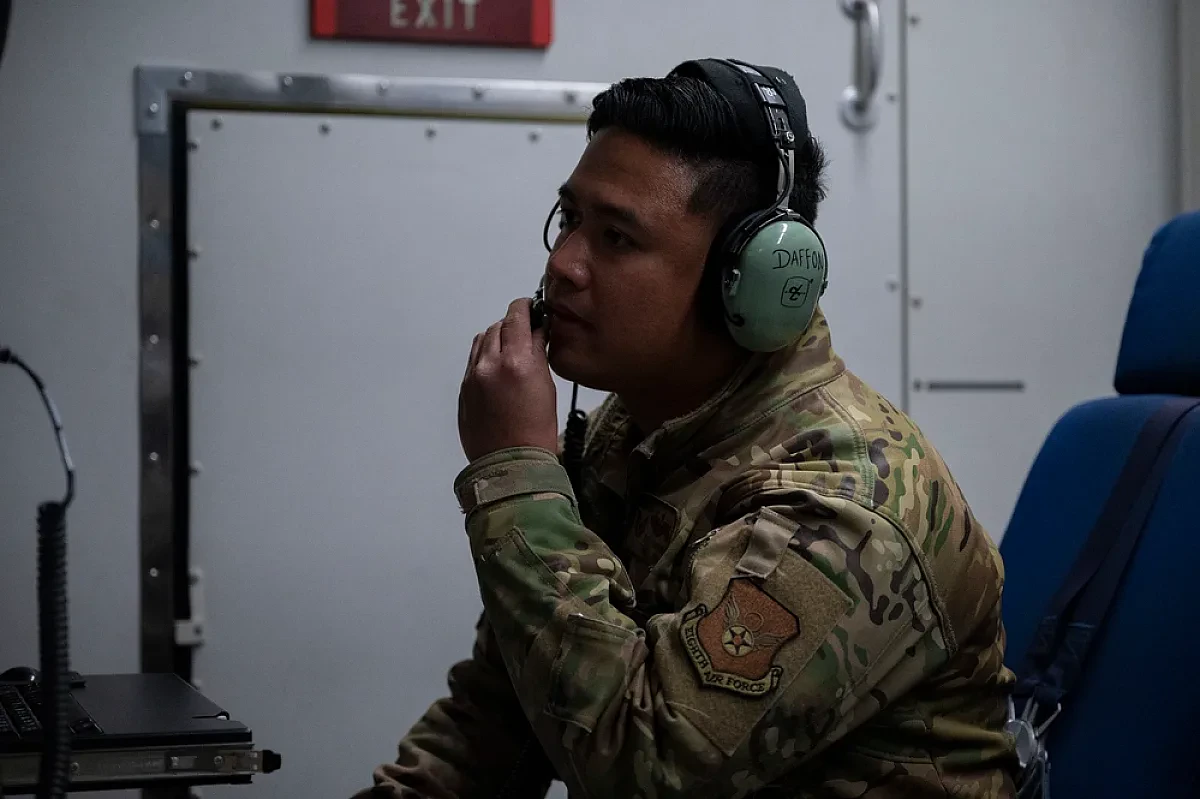
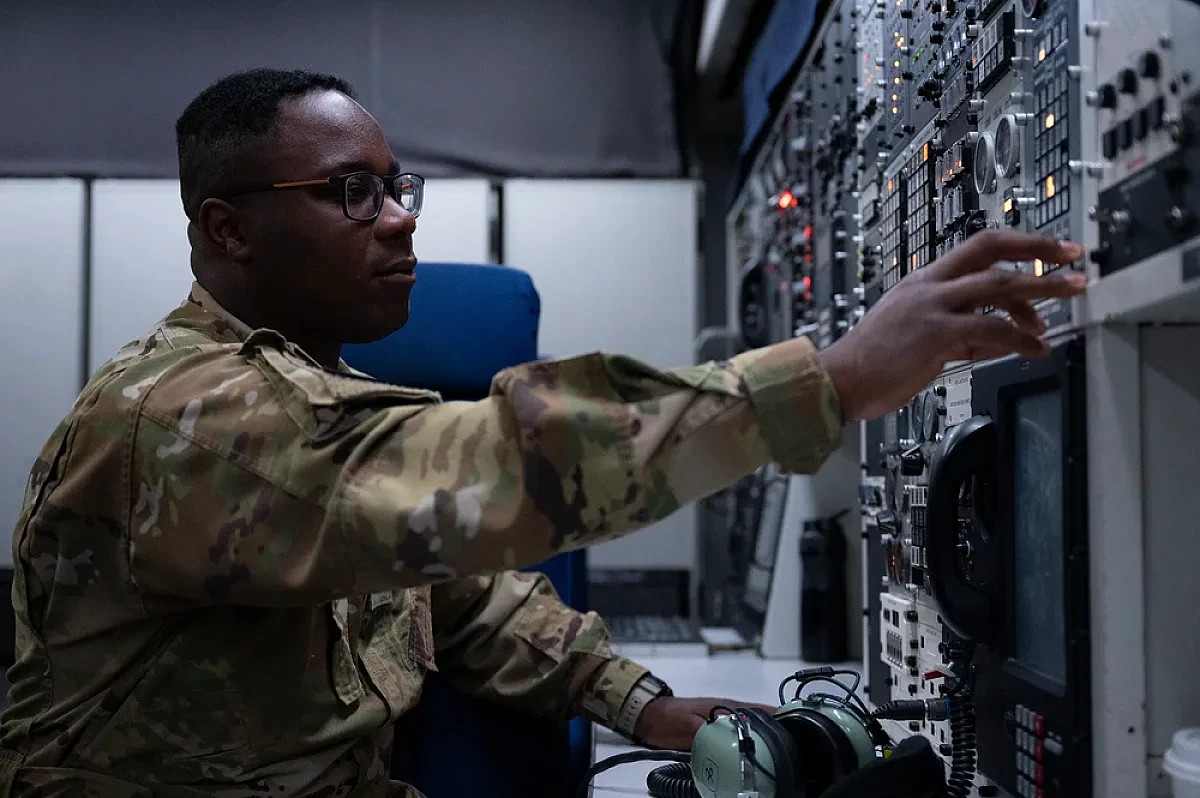
The communications deck houses the equipment that makes the aircraft special: rows of radio equipment, satellite terminals, and encryption systems. There's also a technical control facility where specialists can troubleshoot and reroute communications in real-time.
Unlike Air Force One, which is designed primarily for executive transport with some communications capability, the E-4B is designed as a working military command post. The creature comforts are minimal. This is a warfighting platform, not a luxury aircraft.
Why LAX?
The E-4B fleet is based at Offutt Air Force Base in Nebraska, home of U.S. Strategic Command. These aircraft typically operate from military airfields. So why did one show up at LAX, a commercial airport, for apparently the first time in the plane's 51-year history?
The official answer: Defense Secretary Pete Hegseth was using it for his "Arsenal of Freedom" tour, visiting defense contractors in Southern California. He toured Rocket Lab's facility in Long Beach on Thursday and worked out with UCLA's ROTC program on Friday morning.

But that raises another question. Why use the E-4B instead of a standard military transport? The Secretary of Defense typically travels on a C-32 (a military 757) or C-40 (military 737). Using the Doomsday Plane for a routine domestic trip is unusual.
My speculation: this was partly about optics. The "Arsenal of Freedom" tour is designed to highlight American military-industrial capability. What better way to make that point than arriving on the most capable military aircraft in the U.S. inventory? It's a flex, and an effective one.
The LAX logistics also made sense for this particular mission:
Edwards AFB is about 100 miles north in the Mojave Desert. Great for flight testing, terrible for quick access to Long Beach and Los Angeles.
March Air Reserve Base near Riverside is 60+ miles from Long Beach, and anyone who's driven the 91 freeway knows that could mean two hours in traffic.
Point Mugu and Los Alamitos have runway length limitations that, while technically adequate, don't provide the margins a cautious pilot would want with a fully-loaded 747.
LAX Runway 25L is 11,096 feet of concrete, more than enough for the E-4B, and it's just 20 miles from Long Beach via the 405.
For a high-profile VIP transport mission where time and convenience matter, LAX actually makes sense. It's just that nobody had ever done it before.
LAX's Runways: Built for This
LAX operates four parallel runways in two complexes. The north complex (24L/6R and 24R/6L) and the south complex (25L/7R and 25R/7L) can both handle the largest aircraft in the world. The E-4B, despite being a heavy 747, isn't even close to the maximum capacity these runways can support.
The E-4B was spotted using Runway 25L, the same runway that Air Force One typically uses when the president visits Los Angeles. This runway offers a straight-in approach from the east, keeping the aircraft away from the more congested airspace over Santa Monica Bay.
LAX's runways were originally built to military specifications during the post-World War II era, and they've been continuously upgraded since. During the Cold War, LAX served as a backup dispersal base for Strategic Air Command bombers. The infrastructure to handle heavy military aircraft has been there for decades; it's just rarely used.
The Geopolitical Timing Was Coincidental (Probably)
The E-4B's appearance at LAX happened to coincide with significant international news: U.S. forces had captured Venezuelan president Nicolas Maduro and his wife, transferring them to American custody. Social media immediately connected the two events.
"The Doomsday Plane landing right after we grabbed Maduro? That can't be coincidence," one viral post claimed.
It almost certainly was coincidence. The "Arsenal of Freedom" tour was announced in advance by the Department of Defense. Secretary Hegseth's Los Angeles visit was on the public schedule. The Maduro operation happened to occur during the same news cycle, but there's no operational reason to use the E-4B for that kind of response.
If the U.S. anticipated a military confrontation with Venezuela or its allies, you'd see very different aircraft movements. The E-4B would be airborne over the continental United States, not parked at a commercial airport letting people take photos.
The Online Panic Was Overblown (But Understandable)
Within hours of the E-4B being spotted, social media was ablaze with speculation. "WAR IMMINENT?" one X user posted, in one of the more restrained reactions. Others went further, connecting the aircraft to everything from the Maduro capture to imminent nuclear war with Russia or China.
I get the reaction. When an aircraft literally nicknamed the "Doomsday Plane" shows up unexpectedly at a major civilian airport, people notice. The aircraft's very existence is a reminder that the U.S. government has planned for scenarios most of us prefer not to think about.
But the panic missed a crucial point: if this aircraft was being deployed for an actual emergency, you wouldn't see it. The E-4B's normal operational profile during a crisis involves taking off immediately, climbing to high altitude, and staying airborne for as long as possible while receiving constant aerial refueling. It doesn't park at commercial airports where anyone with an iPhone can photograph it.
What Aviation Enthusiasts Spotted
For plane spotters, this was a genuine once-in-a-lifetime opportunity. The E-4B is rarely seen outside military airfields, and photographing it at a civilian airport is almost unheard of. Aviation photographers who happened to be at LAX that day captured images that will be circulating in enthusiast communities for years. The YouTube channel Airline Videos, which livestreams LAX operations 24/7, captured the entire arrival and departure sequence, making their footage the definitive visual record of this historic event.
The distinctive features visible at LAX included:
The SHF radome (the large dome behind the cockpit) that distinguishes it from any civilian 747
Air-to-air refueling receptacle on the nose, allowing the aircraft to refuel from KC-135 and KC-46 tankers
Complete lack of cabin windows on the main deck, giving it a distinctly military appearance
Multiple blade antennas along the fuselage for various communication systems
The distinctive Air Force white-over-light-blue paint scheme with "UNITED STATES OF AMERICA" lettering
Wingtip HF antennas visible on close inspection
The aircraft was photographed by multiple aviation accounts on X, and the images quickly went viral. Right-wing activist Laura Loomer and Breitbart reporter Olivia Rondeau, who were accompanying Secretary Hegseth on the trip, also posted photos from inside and around the aircraft, giving rare glimpses of the interior.
The Future of the Doomsday Fleet
Here's something worth knowing: the E-4B fleet is aging, and there's no clear replacement in sight. These aircraft are based on 1970s-era 747-200 airframes, and replacement parts are increasingly difficult to source. Boeing stopped building the 747 entirely in 2023, meaning there will never be another new 747 airframe.
The Air Force has studied potential replacements for years. The leading candidate was the Boeing 747-8, which would have been designated E-4C. However, with 747 production ended, that option is now limited to aircraft already built. The Air Force would need to acquire existing 747-8 airframes and convert them, a process that could take a decade or more.
Alternative platforms have been discussed, including a potential E-4 replacement based on the Boeing 777 or 787, but no program has been funded. For now, the Air Force is focused on keeping the existing E-4Bs flying through continuous maintenance and upgrades.
This means the aircraft you could have spotted at LAX last week might be operating for another 10-15 years. The 747-200 airframe is remarkably durable when properly maintained, and the E-4B fleet has been maintained to the highest possible standards.
Will It Come Back to LAX?
Now that the precedent has been set, will we see the E-4B at LAX again? Possibly. The Secretary of Defense visits Southern California regularly, and if the E-4B proved useful for this trip, there's no reason it couldn't be used again.
More likely, though, this will remain a rare event. The E-4B's primary mission is nuclear command and control, not VIP transport. Using it as a taxi, even for the Secretary of Defense, is an unusual luxury that probably won't become routine.
But for one day in January 2026, LAX hosted the most capable military aircraft in America's inventory. For aviation enthusiasts, that's the kind of moment that makes spending hours at airports with a camera worthwhile.
Why This Landing Mattered
Was the E-4B landing at LAX a sign of impending doom? No. Was it one of the coolest aviation events at LAX in recent memory? Without question.
For aviation enthusiasts, military aircraft fans, Cold War history buffs, and anyone interested in the more obscure corners of government operations, this was a rare treat. The "Doomsday Plane" at a commercial airport, in broad daylight, where anyone with a camera could capture it. After 51 years of operation, it had never happened before.
The aircraft exists because the U.S. government takes continuity of command seriously, even in the most extreme scenarios. Its presence is a reminder of threats we hope never materialize. But on this particular day, it was just a very cool airplane doing a very unusual airport visit.
Next time you're plane spotting at LAX, watching the endless parade of narrowbodies taxi past, remember: sometimes the skies deliver something extraordinary. You just have to be there when it happens.